

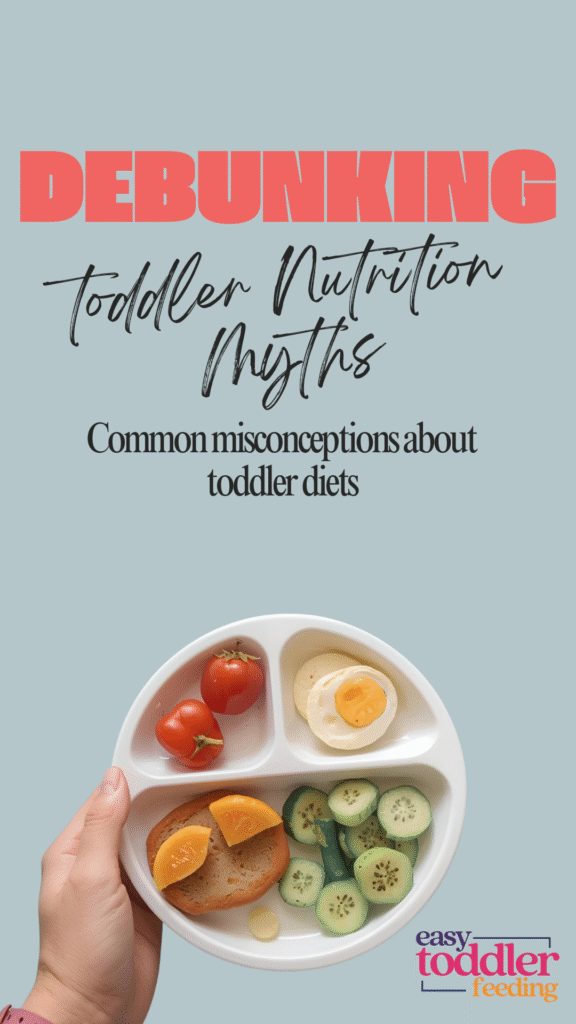
It can be confusing as a parent to navigate all the toddler nutrition information and implement a workable feeding strategy at home, especially if your little one is a picky eater. Don’t worry, in today’s post we will debunk some of the common toddler nutrition myths and understand what we can do as parents to ensure a smooth feeding journey.
Debunking common toddler nutrition myths
These are some of the most common misconceptions about toddlers diet.
Myth 1: Cow milk is a must for toddler nutrition.
Fact: While cow milk is a good calcium source, toddlers don’t need excessive milk. Too much (over 2-3 cups/day) can actually reduce appetite for solid foods and cause iron deficiency. If getting more calcium is the goal, try adding yogurt, cheese, leafy greens, tofu, almonds, and fortified plant-based milks to toddler diet along with a cup or two of cow milk for variety.
Read here to understand everything you need to know about milk for toddlers.
Myth 2: Toddlers should drink juice daily.
Fact: Juice contains concentrated fruit sugars that can lead to tooth decay if had daily. To get the goodness and vitamins of fruit why not offer whole fruit to the toddler in an age-appropriate way. Peel off the skin of thick fruits like apple, pears and peaches, cut into small cubes suited for the pincer grasp where needed and cut round fruits into quarters.
Offering whole fruits instead of juice adds much-needed fiber to the child’s diet that can help with regular bowel movement too.
Myth 3: Add a lot of ghee/olive oil to all toddler food.
Fact: Parents especially parents of picky eaters tend to excessively focus on adding fats like ghee, oil or milk cream to baby and toddler diet with the aim to increase the weight of the child. Ghee contains saturated fats and even though children under 2 require a good amount of fat for brain development try to add a variety of healthy fats from many different sources rather than stick to ghee and oil.
Examples of good fats for toddlers are avocados, nuts and seeds in powdered form or in a nut butter form and cheese.
Myth 4: Avoid all common allergy causing foods.
Fact: Current guidelines recommend introducing common allergy causing foods like eggs from 6-7 months of age. Early introduction can help prevent food allergies rather than delay them. Delaying introduction to highly allergenic foods does not prevent allergies and may even increase the risk.
Parents should introduce these foods one at a time in small amounts and watch for any reaction. Speak with a pediatrician for further guidance.
Common food allergens like, eggs, can be offered whole with both egg yolk and white preferably in scrambled egg form or boiled.
Nuts and seeds should be introduced one at a time over a period of time preferably in a powdered form.
And whole cow’s milk can be offered to toddlers over the age of 1.
It is preferable to introduce an allergenic food for the first time to baby or toddler in the first half of the day. This way if the child does develop a reaction you have time in the day to visit your doctor’s office and get necessary medical attention.
Myth 5: Distraction feeding and force feeding is the only way toddlers will eat.
Fact: Forcing children to eat certain amounts of food can create negative associations with food and harm self-regulation. Toddlers are usually good at knowing when they’re hungry or full. Parents decide what and when; the child decides how much. This simple feeding philosophy keeps the power struggles away at the dinner table.
Start viewing the child’s intake from a weekly perspective, keep a food log, you will find on observation that most toddlers get enough nutrition over the course of a week, even if they eat very little at each meal. Growth charts, energy, and development are better indicators than daily food intake.
For more on Intuitive eating for toddlers read this post of mine.
Myth 6 : Snacks should always be “kid foods” like cookies, chips or crackers.
Fact : Toddlers don’t need separate “kid foods.” Introducing special kid snacks and pouches is a modern day marketing gimmick aimed at targeting anxious parents.
Toddler snacks can be nutritious foods like fruit, steamed or pan-fried vegetables paired with cheese and hummus, a simple option like whole-grain toast with some nut butter or homemade fruit and yogurt smoothies. The aim is to provide energy dense foods with adequate amount of nutrients over processed snack foods.
Myth 7 : All toddlers should be given multivitamins.
Fact : Most toddlers get their nutrients from a balanced diet. Supplements may be needed only in special cases (e.g., vitamin D, iron for picky eaters, or if following a strict plant-based diet). Always discuss your toddlers individual needs with their pediatrician before starting supplements.
Hope this post helped debunk some of the most common toddler nutrition myths. To understand how to feed toddlers read this post and for food ideas for picky eaters try this post here.
Until next time!
