
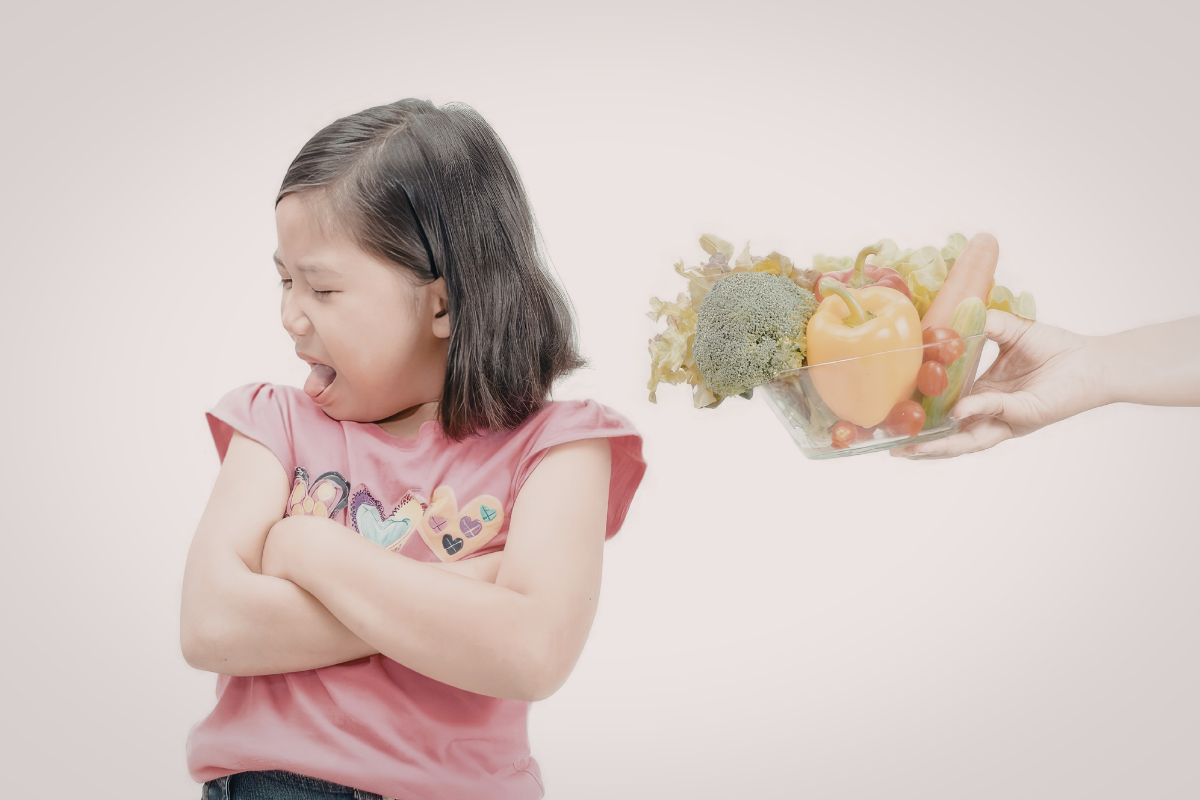
“Just one more bite.”
“Finish your vegetables.”
“If you don’t eat this, no dessert.”
If you’ve said any of these…you’re not alone.
Most parents are trying their best to raise healthy eaters.
But here’s the uncomfortable truth:
The more you force vegetables, the less your child wants them.
If you want to teach your child to eat vegetables, force feeding won’t work. Period!
Stop forcing your child to eat vegetables
It feels logical, kids need vegetables, so we insist.
But to a child, pressure feels very different.
When eating becomes a battle:
- Food turns into control
- Vegetables become “the enemy”
- Mealtimes become stressful
And over time,
Kids don’t just refuse vegetables; they resist the entire experience of eating.
Related reading : How to reverse picky eating in children.
What’s actually happening
Children are wired to:
- Prefer familiar foods
- Be cautious with new tastes
- Seek autonomy (especially around food)
Therefore, when we:
- Force
- Bribe
- Pressure
It triggers resistance.
Not because they’re stubborn. But because they’re human.
The common feeding mistake most parents make and don’t realize
- Making vegetables a “must-finish” food
- Offering dessert as a reward
- Hiding vegetables completely (and never exposing them)
- Giving up after 1–2 refusals
These approaches may work short-term, but backfire long-term.
What to do instead and what actually works
1. Serve Meals Without Pressure
Put vegetables on the plate alongside the other food groups without expectations.
Sit on your hands. Don’t go in with instructions,
- “Eat this first”
- “Finish this”
- “Just try it” (repeatedly)
Your job is to serve.
Your child’s job is to decide whether to eat.
This is called the Division of responsibility and is a core tenant of Responsive feeding. When you focus on plating healthy meals and creating a pressure free environment at the table the children will eventually learn to eat the meals.
2. Repeat Exposure (This Is Everything)
Most kids need 10-15+ exposures to accept a food.
That includes seeing it, touching it, smelling it, licking it even before eating.
Don’t give up too early.
Sometimes even after 10-15 exposures the child does not warm up to the food in that case take a break for a while and re-introduce later. Tastes change as the child’s palate matures.
Never say never.
3. Make It Familiar, Not Fancy
Skip complicated recipes.
Start with :
- Simple cooked vegetables
- Mild flavors
- Familiar combinations (if the child likes dal try spinach dal, they like fries, try sweet potato fries)
Familiarity reduces resistance and expands the palate to include new foods that they would have otherwise not tried in an unknown recipe.
4. Involve Your Child
Kids are more likely to eat what they help create.
Let them:
- Wash vegetables
- Stir ingredients
- Choose between options
Participation builds comfort and when they try and like something it builds their confidence to take more risk with unknown foods.
5. Eat Together (Modeling Matters More Than You Think)
Children learn by watching. Remember, Monkey See, Monkey Do.
When they see you:
- Eating vegetables calmly
- Enjoying them
- Not making a big deal
They internalize that behavior.
6. Trust Appetite (Even If Intake Is Low)
Some days they’ll eat nothing. Other days, surprisingly more.
That’s normal. Especially with toddlers, appetite varies wildly.
For this reason, look at intake over a week rather than one meal.
What this looks like
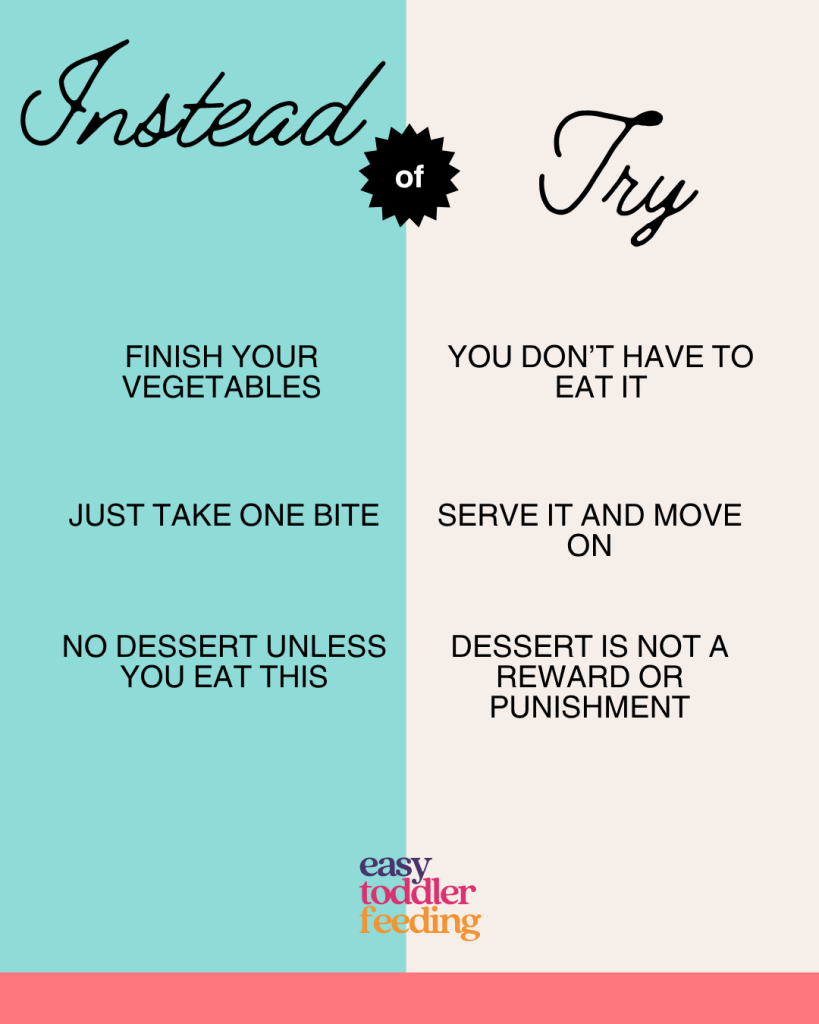
The shift that changes everything
When you remove pressure:
- Kids feel safe around food
- Curiosity replaces resistance
- Mealtimes feel calmer
And slowly, vegetables stop being a fight.
Finally,
Teaching your child to eat vegetables isn’t about control.
It’s about:
- Trust
- Consistency
- Patience
Because healthy eating isn’t built in one meal.
It’s built over hundreds of calm, pressure-free ones.
